
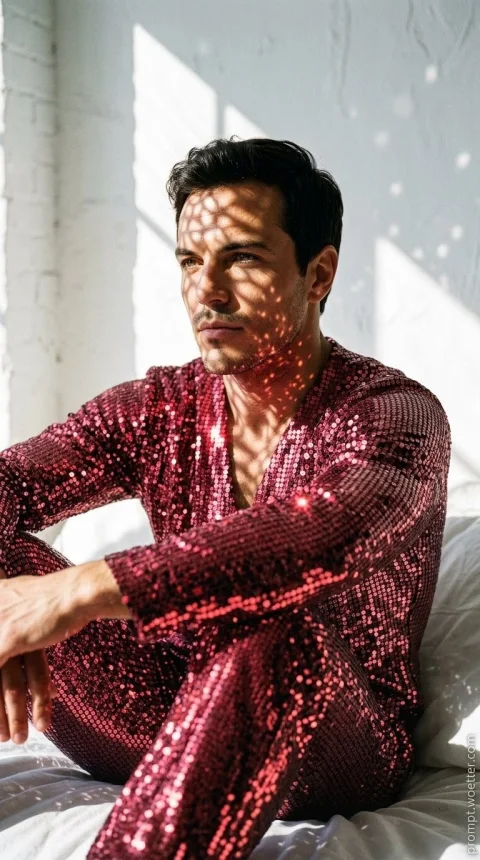
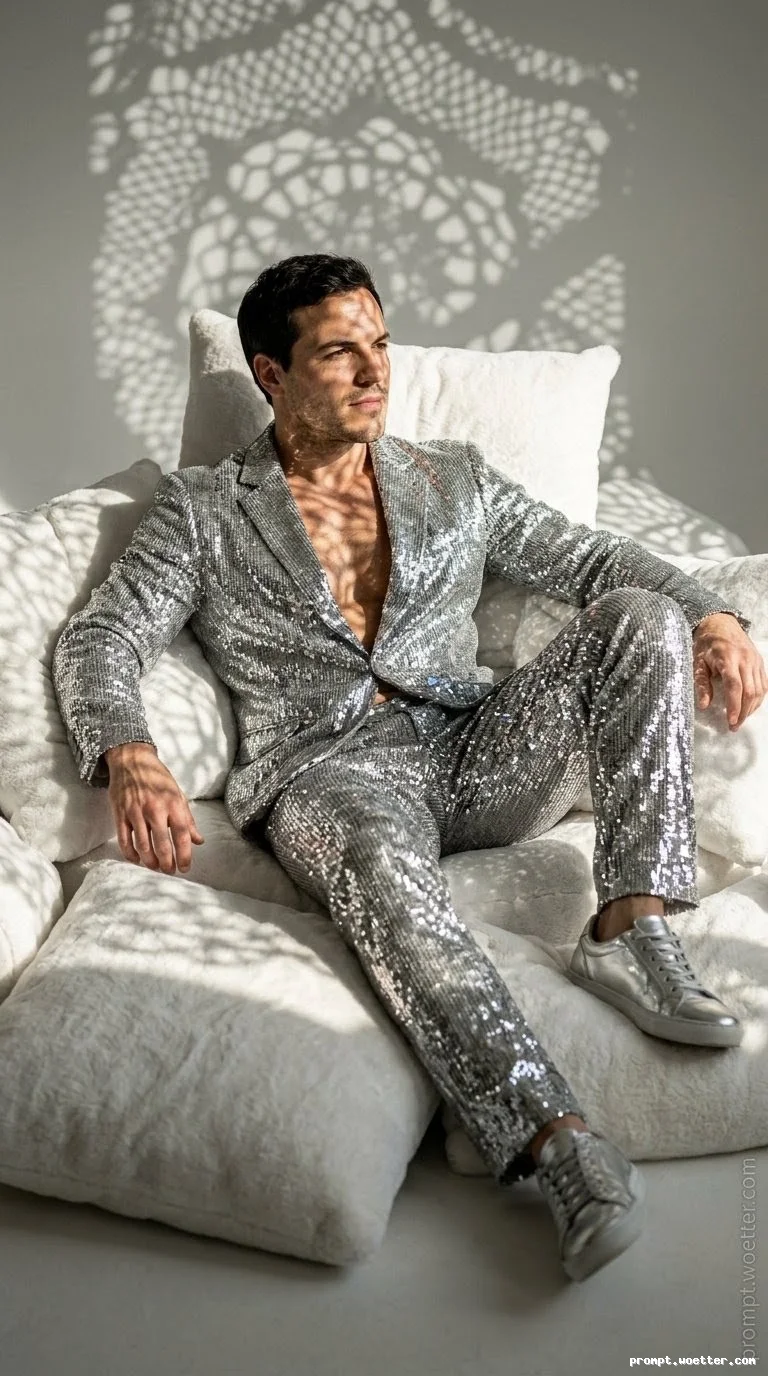
Geometric gobo lighting combined with highly reflective garments represents a pinnacle of technical complexity in high-end editorial portraiture. This photographic technique relies on the precise manipulation of hard light sources passing through perforated physical modifiers to project sharp, distinct shadow patterns onto a subject. When this dappled, grid-like light interacts with complex reflective materials, such as silver sequins, it creates a dual-layered visual environment: a structured geometric map on the subject's skin contrasting with chaotic, scattered specular highlights refracting from the wardrobe.
Understanding the physics of light modification and reflection is essential for photographers aiming to execute this style. The core methodology requires a high-intensity, unmodified continuous light or strobe, a precisely cut grid gobo placed at a calculated distance to maintain edge sharpness, and a medium format sensor capable of resolving the extreme dynamic range between the specular peaks and deep shadows. Furthermore, replicating this exact aesthetic through AI prompt engineering requires strict vocabulary focused on hard light, gobo patterns, and physical material properties.

The Mechanics of Geometric Gobo Lighting
The defining characteristic of the reference image is the intricate, grid-like shadow pattern projected across the subject's face and chest. This effect is achieved through the use of a gobo (a "go-between" or "goes before optics"). In this specific scenario, the gobo is likely a perforated metal sheet or a dense wire mesh.
To achieve the sharp edges seen in the shadow pattern, the light source must possess specific characteristics. A "hard" light source is mandatory. This means the light source must be physically small relative to the subject, or placed at a significant distance. Bare bulb strobes, optical snoots, or direct sunlight are the ideal sources. Softboxes or umbrellas will diffuse the light, causing the shadow pattern to blur and lose its geometric integrity.
The distance between the gobo and the subject also plays a critical role. Placing the gobo closer to the subject will result in sharper, more defined shadows. Moving it closer to the light source will soften the edges of the pattern. For the sharp, distinct grid seen in the reference, the mesh modifier was placed relatively close to the subject, interrupting the hard light rays right before they made contact with the skin.
Managing Highly Reflective Garments
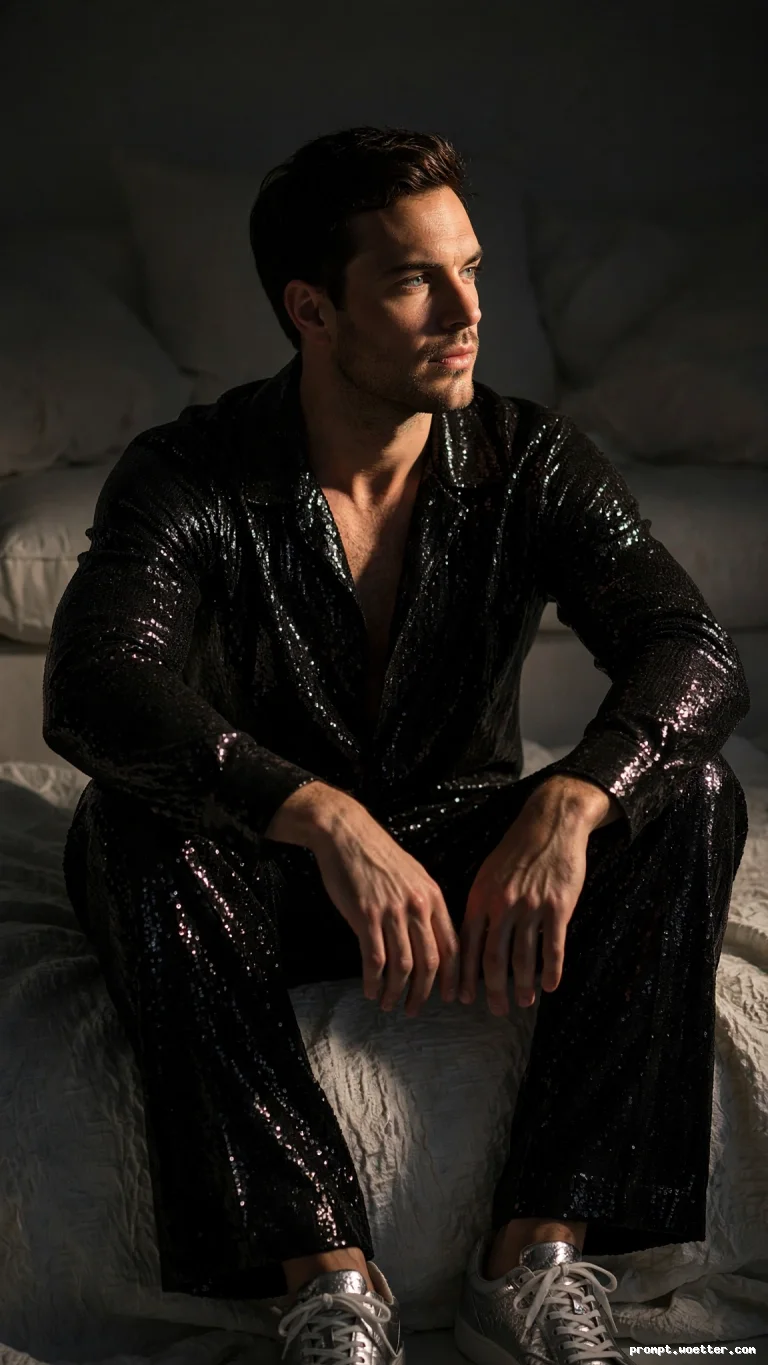
Photographing highly reflective clothing, such as a fully sequined silver suit, presents a unique set of exposure challenges. Sequins act as thousands of tiny, individual mirrors. When hit by a hard light source, they reflect the light directly back into the camera lens, creating intense specular highlights.
The primary challenge is managing the dynamic range. The difference in exposure values between the deep shadows created by the gobo and the peak highlights reflecting off the sequins is immense. If the exposure is set based on the shadows, the sequins will completely blow out, losing all texture and appearing as pure white shapes. Conversely, exposing for the highlights will crush the shadows into pure black.
Professional execution requires a delicate balance. Photographers must expose to protect the highlights, ensuring that the structure and color of the sequins are retained. The shadows can then be gently lifted in post-processing. Additionally, the angle of incidence is crucial. The camera's position relative to the light source and the subject dictates how many of those tiny mirrors will reflect light directly into the lens. A slight adjustment in the subject's posture or the camera angle can drastically alter the intensity of the garment's reflection.
Hardware Selection for Extreme Dynamic Range
Executing this technique requires specific camera and lighting hardware.
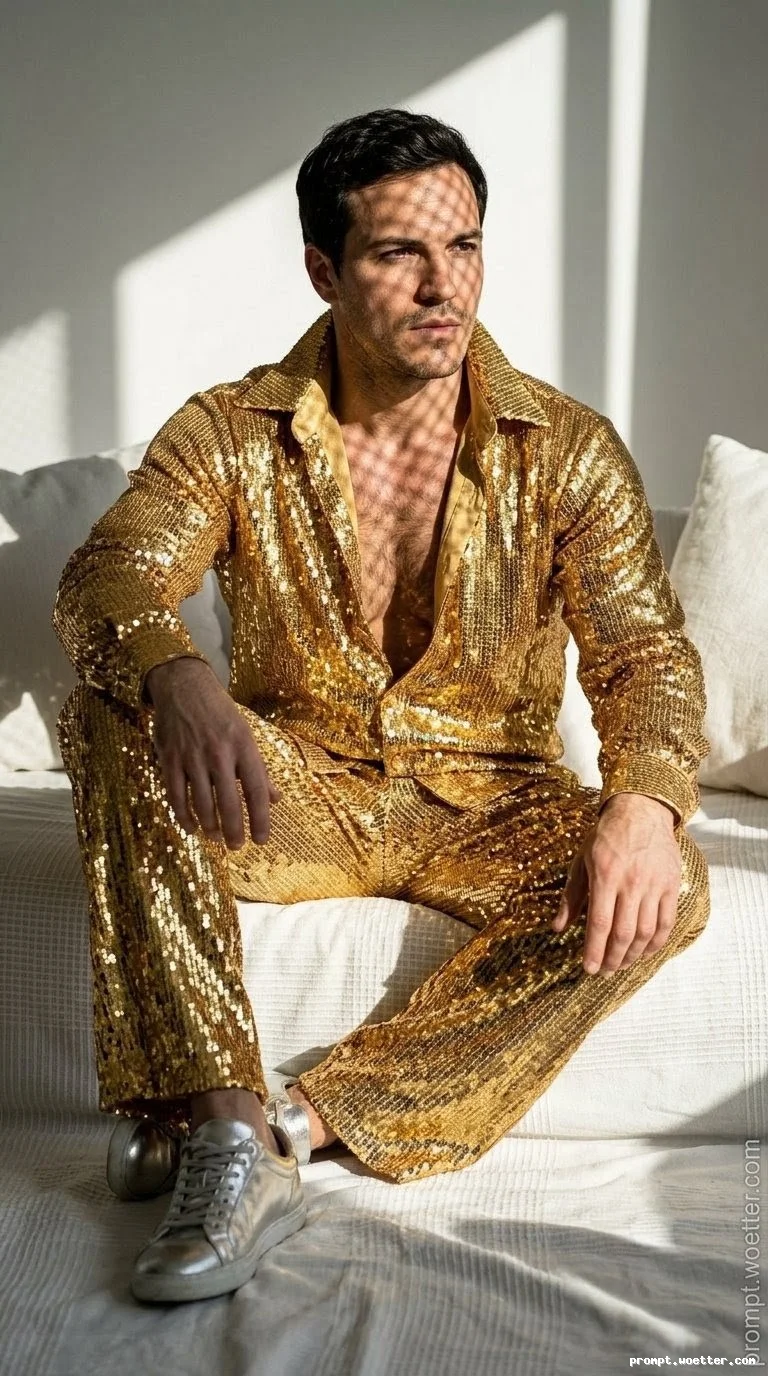
The Sensor: Medium format digital cameras (such as those from Hasselblad or Phase One) are highly preferred for this type of editorial work. Their larger sensors offer superior dynamic range, often exceeding 14 or 15 stops. This allows the photographer to capture the blazing highlights of the sequins and the deep shadows of the gobo pattern simultaneously without catastrophic clipping. Furthermore, medium format sensors resolve micro-contrast incredibly well, ensuring the texture of individual sequins and skin pores remains razor-sharp.
The Lens: An 85mm to 110mm equivalent lens is ideal. This focal length provides a flattering compression for portraiture without isolating the subject entirely from the environment. Shooting at a moderately wide aperture, such as f/2.8 or f/4, ensures the subject remains the primary focus while allowing the background textures to fall into a soft, non-distracting blur.
Lighting Power: High-wattage continuous lighting (like HMI fixtures) or powerful studio strobes (such as Profoto or Broncolor) are necessary. Because the gobo modifier blocks a significant percentage of the light output, the source itself must be incredibly bright to maintain an appropriate exposure at the desired aperture and low ISO settings required for maximum image quality.
Post-Processing and Color Grading
The raw file captured in camera is only the beginning. Post-processing is where the high-end editorial aesthetic is solidified.
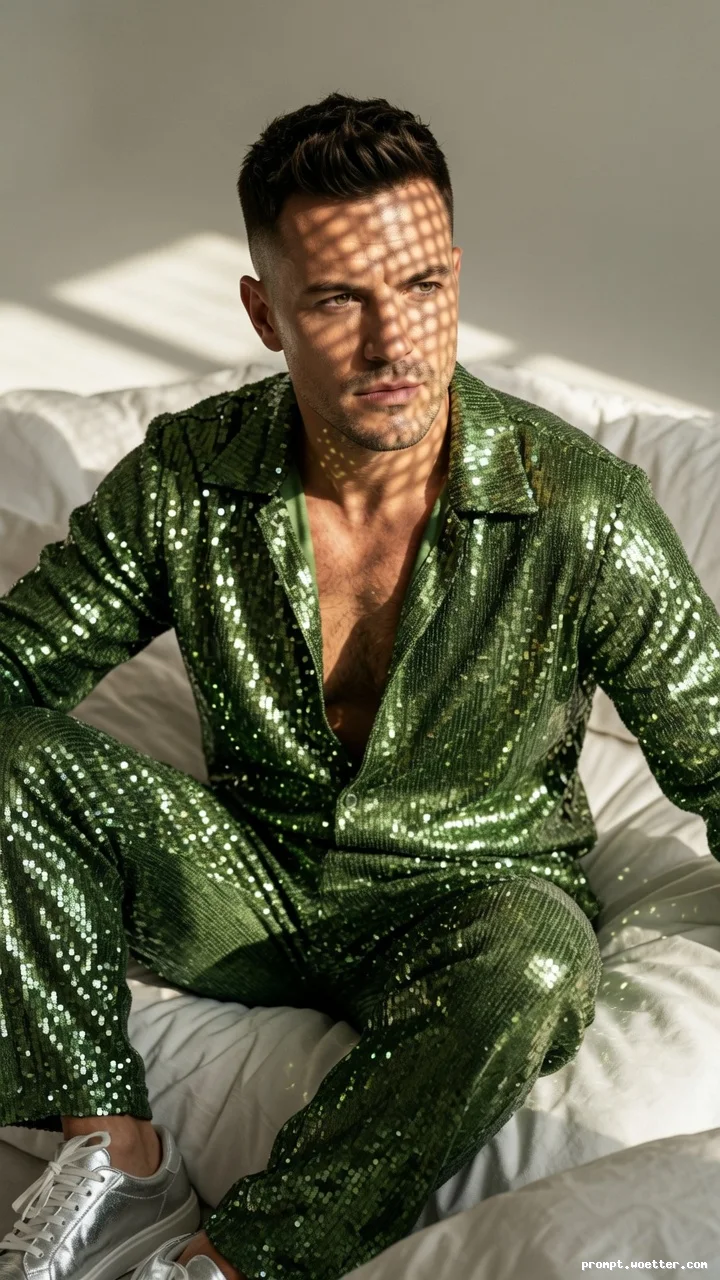
The initial step is dynamic range recovery. Highlight sliders must be carefully managed to retrieve the microscopic details within the silver sequins. Shadow recovery must be applied selectively to the face and body to ensure the subject's features are visible through the geometric shadow pattern, without washing out the contrast entirely.
Color grading plays a vital role in setting the mood. The reference image utilizes a warm, almost cinematic color palette. The highlights carry a subtle golden-hour warmth, which contrasts beautifully with the stark silver of the garment and the slightly cooler tones residing in the deep shadows. This split-toning approach adds depth and three-dimensionality to the final portrait. Clarity and texture sliders should be used sparingly, targeting only the garment to enhance its metallic nature, while skin retouching should focus on frequency separation to maintain natural texture while removing temporary blemishes.
Best Practices for AI Prompt Engineering
Replicating this specific photographic style using generative AI requires a highly structured prompt that speaks the language of professional photography. Vague descriptions will yield generic results.
When constructing the prompt, prioritize the lighting and material descriptions. Instead of saying "shadows on face," specify "harsh direct light filtered through a wire mesh gobo creating a sharp geometric shadow grid on the face and chest." This explicit terminology forces the AI to render the exact physical light properties desired.
Material properties must also be explicitly stated. "Silver suit" is insufficient. Use phrases like "highly reflective silver sequin matching set, intense specular highlights, metallic micro-reflections." This instructs the rendering engine to accurately simulate the physics of light bouncing off thousands of tiny mirrored surfaces.
Finally, utilize the Identity Lock technique when working with image-to-image or face-swapping capabilities. As demonstrated in the preparation block, clearly instruct the AI to "use the person from the attached picture, maintaining the subject's identity accurately," while directing all lighting and environmental variables to match the new scene. This ensures the structural integrity of the subject's face remains intact despite the complex, altering shadow patterns being projected onto it.
JSON prompt
{
"subject": "Use the person from the attached picture, maintaining the subject's identity accurately, preserving exact facial structure, jawline, hair density, eyes and body type. Adjust the skin tone and lighting on the face to perfectly match the background scene. The subject is wearing a highly reflective silver sequin matching set consisting of a wide-collared, long-sleeved shirt unbuttoned to mid-chest revealing chest hair, paired with loose-fitting matching sequin trousers. He is wearing silver metallic low-top sneakers with white laces.",
"action": "Sitting relaxed on a soft white textured surface with legs slightly bent, resting arms near the knees, looking off-camera to the right with a serious, contemplative expression.",
"location": "Minimalist indoor studio or brightly lit bedroom featuring soft, rumpled white fabric cushions and pillows in the background.",
"style": "High-end fashion editorial, modern disco-glam revival, dramatic chiaroscuro portraiture.",
"composition_and_aspect_ratio": "Medium close-up, slightly elevated camera angle, framing from the mid-shin to just above the head, ensuring the subject fills the frame centrally. Aspect ratio 9:16.",
"camera_and_lighting_details": "Shot on medium format digital camera, 85mm lens, f/2.8. Lighting is characterized by harsh, direct artificial sunlight heavily modified by a fine mesh or perforated grid gobo placed close to the subject. This creates a distinct, sharp geometric grid shadow pattern across the subject's face, neck, and exposed chest. The harsh light hitting the silver sequins creates intense, scattered specular highlights, micro-reflections, and sharp contrast.",
"refining_details": "Ultra-detailed fabric texture, hyper-realistic skin pores and stubble visible under the harsh geometric light, cinematic color grading featuring warm golden highlights against cooler, deep shadows. Flawless focus on the face and sequin reflections. Instruct readers to attach their own photo alongside the prompt.",
"specific_text_integration": "None.",
"factual_constraints": "Strictly photorealistic, no illustrative elements, physically accurate light refraction on the sequins.",
"reference_entries": "High fashion editorial photography, 1970s Studio 54 inspired modern portraiture, cinematic lighting design."
}
Implement these advanced lighting and prompting techniques in your next editorial project. Subscribe to our technical newsletter for in-depth breakdowns of high-end commercial photography and advanced AI generation strategies delivered directly to your inbox.