

The 10-Part Orchestration Framework Image Prompt
Important: For this prompts to work perfectly, you must attach a reference picture of yourself with the AI prompt.
SUBJECT:
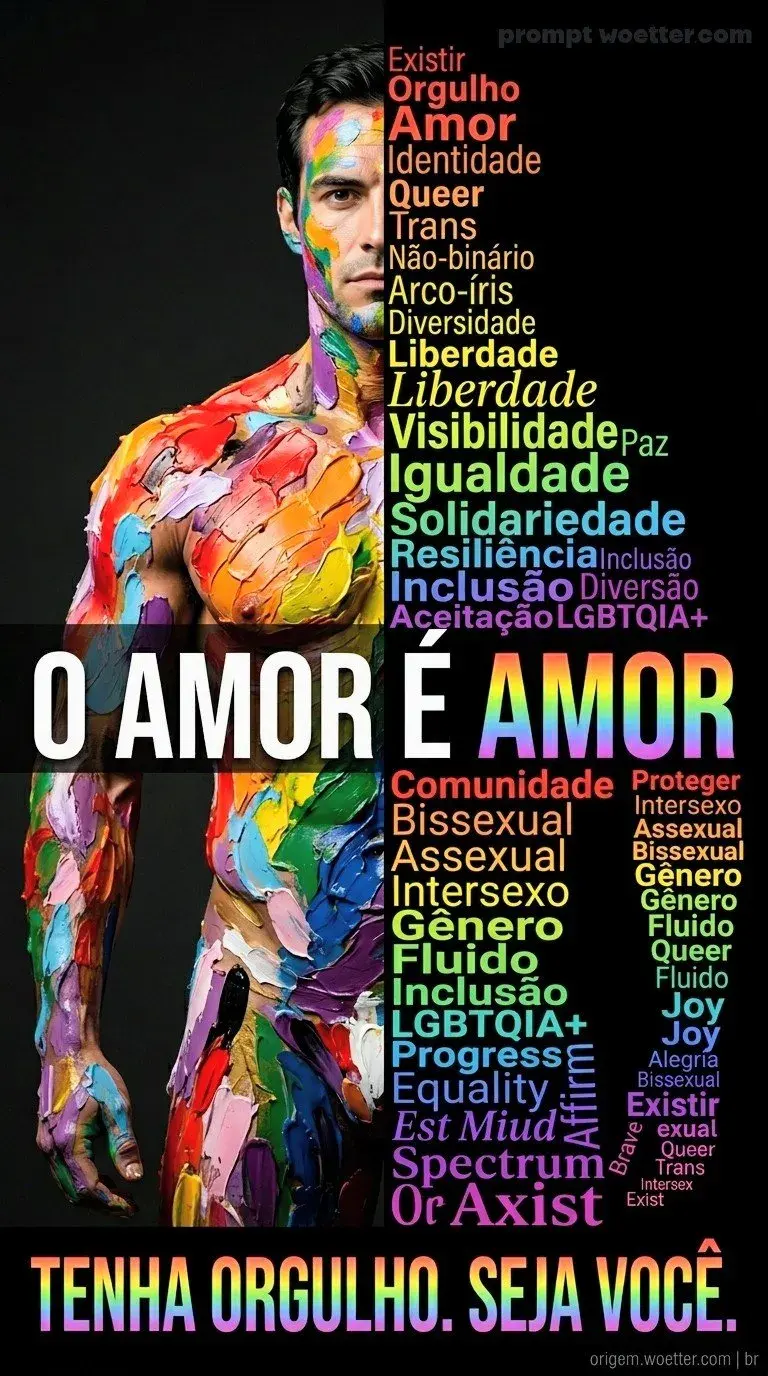
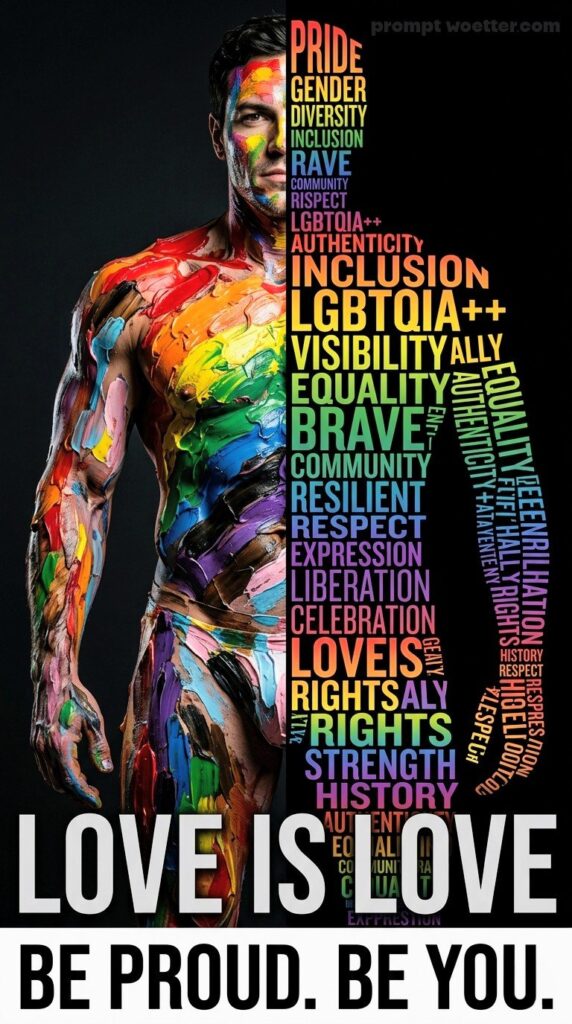
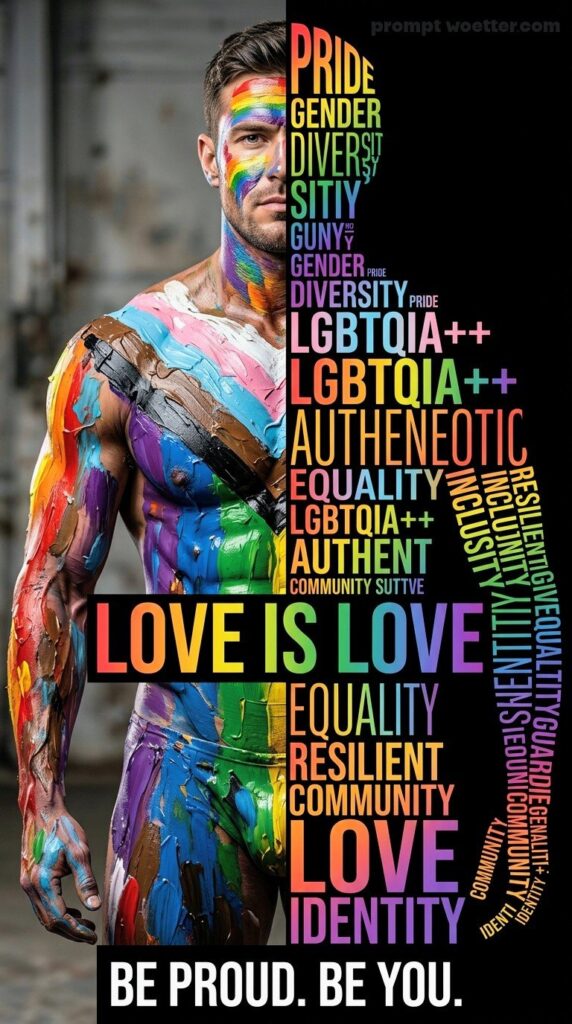
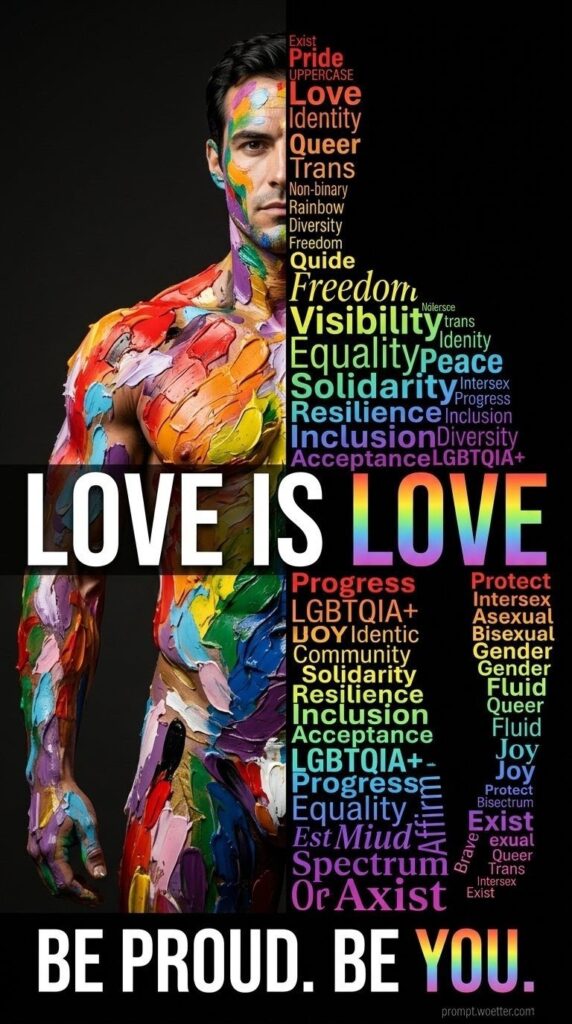
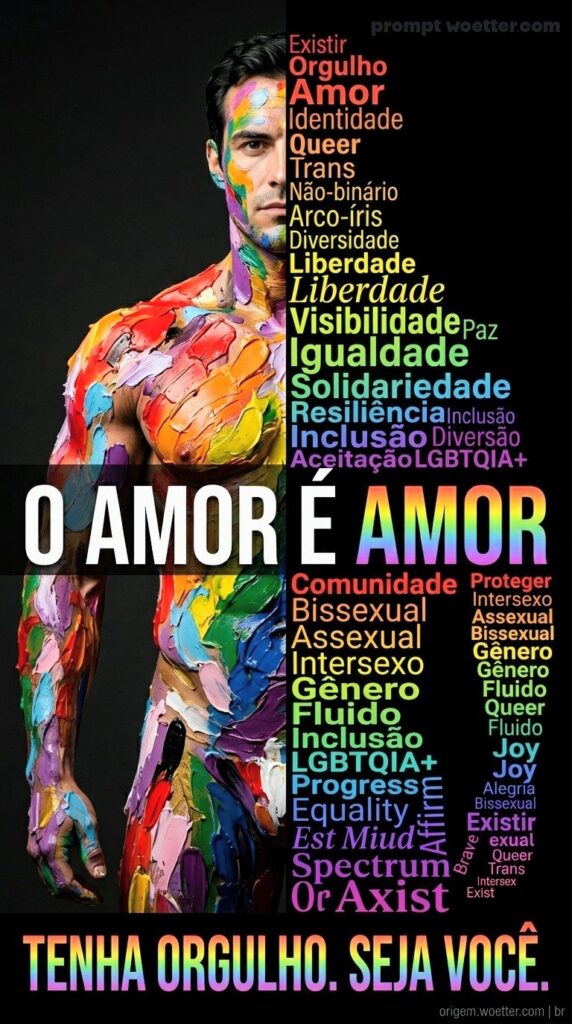
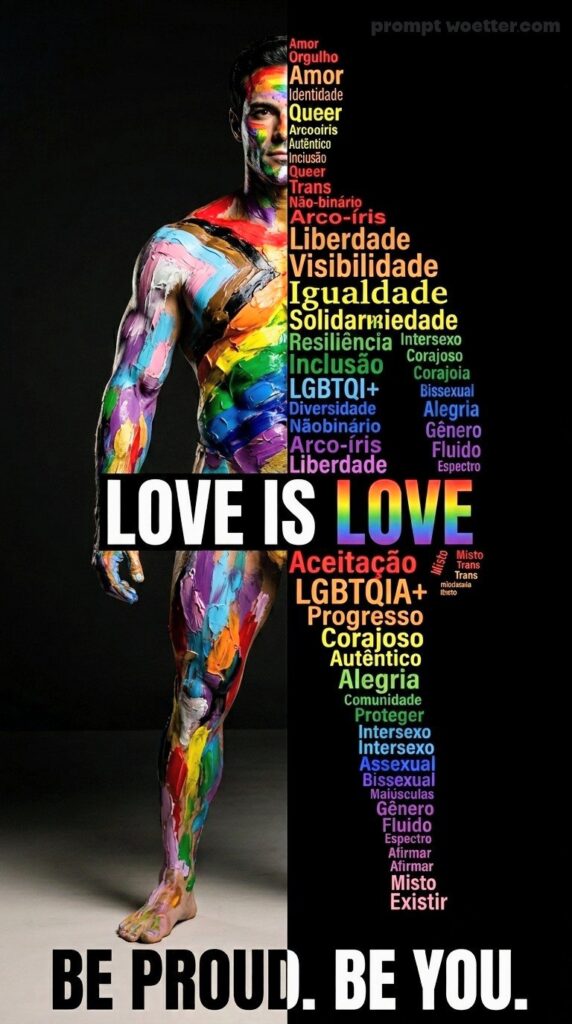
Handsome and muscular man, stoic front-facing pose, full-body frame.
ACTION:
Standing tall and composed, projecting powerful, defiant beauty and visceral pride, split symmetrically down the center vertical axis.
LOCATION:
Neutral or dark studio background on the left receding into shadow. Solid black background absorbing all ambient light on the right.
STYLE:
High-fashion editorial photography mixed with contemporary graphic design. Influences of Platon's bold portraiture, Rankin's expressive body work, and David LaChapelle's color saturation.
COMPOSITION AND ASPECT RATIO:
Symmetrical vertical split composition dividing the canvas exactly in half. Full body framing from head to feet centered on the vertical axis. Aspect ratio 9:16.
CAMERA AND LIGHTING DETAILS:
8K resolution, tack-sharp focus on textures and letterforms, 85mm equivalent portrait-length lens with minimal distortion, deep focus full-body sharpness. Cinematic high-contrast lighting. Dramatic directional key light from upper-left creating hard shadows on the left side. Right side glows via gradient against pitch black.
REFINING DETAILS:
Left side (Living Canvas): All visible skin, including private areas, entirely covered by thick, expressive impasto-style Progress Pride acrylic paint with heavy palette-knife strokes and raised texture. Facial features are preserved and legible beneath the paint. Right side (Typography Silhouette): Full-body profile silhouette constructed entirely from densely packed stylized typography in a vibrant full Progress Pride gradient. No solid fill inside the silhouette, only letterforms.
SPECIFIC TEXT INTEGRATION:
Silhouette words include: Pride, Love, Identity, Queer, Trans, Non-binary, Rainbow, Freedom, Visibility, Equality, Solidarity, Resilience, Inclusion, Diversity, Acceptance, LGBTQIA+, Progress, Brave, Authentic, Joy, Community, Protect, Intersex, Asexual, Bisexual, Gender, Fluid, Spectrum, Affirm, Exist. Fonts vary across serif, sans-serif, display, and condensed. Overlay text 1: "LOVE IS LOVE" placed horizontally just below chest level across both halves in a bold, extra-large display typeface. Overlay text 2: "BE PROUD. BE YOU." as a separate bold, condensed sans-serif text block centered below the entire figure.
FACTUAL CONSTRAINTS:
Zero bare skin visible on either side. Paint must not appear thin or watery. Silhouette must not be filled with solid color. No generic rainbows without impasto texture. Text must be highly legible and not overlapping incoherently. Subject must not appear feminine or gender-ambiguous unless matching the reference. Left side lighting cannot be soft or diffuse. Do not omit the LOVE IS LOVE and BE PROUD BE YOU texts. Must be full-body, not cropped. Maintain the subject's identity accurately, preserving exact facial structure, jawline, hair density, eyes and body type across all generations. Adjust the skin tone and lighting on the face to perfectly match the background scene. Overlay the text 'prompt.woetter.com' at absolute position: 130px from the right edge, 130px from the bottom edge. Style: white, small sans-serif font (~12pt), 20% opacity.
REFERENCE ENTRIES:
Blade Runner 2049 cinematic color and atmosphere, Platon, Rankin, David LaChapelle. IMPORTANT INSTRUCTION: Attach your own reference photo alongside this prompt for the AI to extract your precise facial and physical likeness.
This advanced engineering prompt generates a high-fashion, vertically split editorial photograph perfectly calibrated for LGBTQIA+ pride campaigns and brand identity projects. By seamlessly merging thick impasto acrylic textures with a densely packed Progress Pride typography silhouette, the prompt ensures a cinematic 8K output that balances visceral vulnerability with undeniable strength. This comprehensive breakdown explores exactly how modern artificial intelligence handles axis-splits, heavy texture mapping, and complex text integration to deliver an asset ready for high-level commercial and artistic deployment.
The Visual Strategy of the Vertical Split Composition
Operating diffusion models to create a perfect axis split requires an exceptionally strict technical vocabulary. In Western contexts, the human eye processes visual information from left to right. This establishes the left side as the cognitive “anchor” and the right side as the thematic “destination.” In this particular prompt framework, the left side acts as the physical, tangible anchor—the living canvas. The right side serves as the intellectual and structural synthesis—the typography silhouette.
Artificial intelligence models frequently struggle to maintain two entirely distinct art directions within a single frame without severe concept bleeding. This is precisely why the “Factual Constraints” parameters are non-negotiable. By explicitly dictating that the left background recedes into shadow while the right background remains a solid, light-absorbing black, we establish a mathematical contrast boundary. Furthermore, the directive to utilize an 85mm equivalent portrait-length lens with minimal distortion ensures that the subject’s physical proportions remain commanding and perfectly symmetrical. A wider lens would introduce barrel distortion, which would inherently warp and destroy the perfect vertical axis central to the composition’s success.
Mastering Texture Dynamics: The Impasto Effect
One of the most persistent hurdles in AI image generation is dictating the machine’s understanding of human skin versus applied synthetic materials. The prompt specifically instructs that “all visible skin must be entirely covered by thick, expressive impasto-style acrylic paint.” The word “impasto” is a highly potent trigger within latent space. It forces the rendering engine to calculate thickness, physical displacement maps, and micro-occlusion shadows.
Rather than overlaying a flat, generic rainbow filter, the requirement for heavy palette-knife strokes translates the lived experience of the LGBTQIA+ community into a tangible, resilient armor. To ensure this intense artistic direction does not obliterate the subject’s core identity (especially crucial when a reference photo is provided), the instructions carry strict negative constraints to preserve underlying facial legibility. The dramatic, directional key light from the upper-left is the engine that activates this impasto texture. It casts the hard shadows necessary to reveal the physical peaks and valleys of the paint. Without explicitly defining this light source, the algorithm’s default behavior would default to flat front-lighting, entirely destroying the three-dimensional illusion.
Typographic Silhouettes and Information Architecture
On the right side of the split, the transition from physical photography to graphic abstraction is executed through pure typography. Coherent text generation has historically been AI’s weak point, but the breakthrough lies in defining both the fill behavior and the structural variety simultaneously. The prompt strictly demands “zero solid fill inside the silhouette, only letterforms.” This forces the visual language model to treat the letters not merely as linguistic symbols, but as foundational building blocks for structural rendering.
Mapping the Progress Pride gradient across this continuous typographic silhouette ensures immediate brand recognition. The engine must calculate the subject’s full-body outline and, instead of flooding it with black pixels, fill it with vectorized semantic data. Words such as “Resilience,” “Equality,” and “Queer” create a conceptual mesh that the algorithm utilizes to modulate font weight, ranging from condensed to bold display types. The primary horizontal text overlays—”LOVE IS LOVE” and “BE PROUD. BE YOU.”—are mathematically anchored through rigid spatial directives. Placing them “just below chest level” and “centered below the entire figure” removes all positional ambiguity, preventing the AI from placing vital messaging over the subject’s face or bleeding off the canvas edge.
The Behavioral Economics of Identity Imagery
In an ecosystem saturated with fleeting digital content, an image’s emotional resonance dictates its engagement metrics in fractions of a second. When developing assets for diversity and inclusion campaigns, the most common pitfall is producing lifeless, corporate abstractions. By leveraging powerful visual archetypes—in this case, the grounded “Warrior” stance coupled with the expressive “Creator” aesthetic—you effectively bypass the viewer’s banner-blindness and skepticism filters.
Behavioral economics dictates that human attention is driven by cognitive contrast. The juxtaposition of raw, tactile matter on the left and clean, structured conceptual data on the right initiates an immediate cognitive loop. The viewer first processes the visceral, human impact of the impasto paint, and subsequently, their brain seeks logical context, drawing the eye directly to the word cloud within the typographic silhouette. This dual ocular journey drastically increases image retention time, which in turn signals to social media algorithms that the content holds extreme value, resulting in higher organic reach.
Best Practices for Likeness Integration and AI Control
For art directors and marketers deploying this framework, the subject likeness alignment is arguably the most valuable technical asset. The command to “Maintain the subject’s identity accurately” acts as a weight-locking mechanism. When the user attaches a reference photo alongside the prompt string, the diffusion engine isolates the core biometric data points—jawline architecture, eye placement, hair density—and maps the style transfer dynamically around them.
The strict demand to match skin tone and facial lighting to the background environment prevents the jarring “copy-and-paste” halo effect that plagues amateur AI workflows. Finally, the inclusion of a highly specific pixel-coordinate watermark command (“prompt.woetter.com at absolute position: 130px from the right edge”) demonstrates that precise control over opacity, scale, and placement is now a fully realized capability within text-to-image generative engineering.
By executing this 10-block architecture, you are not merely typing a request; you are programming a sophisticated graphics engine to output a high-end editorial vision that would traditionally require a physical soundstage, a special effects makeup team, a master lighting technician, and a world-class typographic designer.
JSON Prompt
{
  "prompt": {
    "concept": "Full-body art editorial photograph — symmetrical vertical split composition",
    "subject": {
      "description": "Handsome and muscular man, stoic front-facing pose, full-body frame",
      "likeness": "Derived entirely from user-supplied reference photo; no independent facial or physical description",
      "expression": "Stoic, composed, powerful"
    },
    "composition": {
      "format": "Vertical split — left half and right half divided by an invisible central axis",
      "aspect_ratio": "9:16",
      "framing": "Full body, head to feet, centered on the vertical axis"
    },
    "left_side": {
      "label": "Living Canvas",
      "background": "Neutral or dark studio background, receding into shadow",
      "skin_treatment": "All visible skin — including private area — entirely covered by thick, expressive impasto-style Progress Pride acrylic paint; zero bare skin visible",
      "paint_colors": [
        "Red (#FF0018)",
        "Orange (#FFA52C)",
        "Yellow (#FFFF41)",
        "Green (#008018)",
        "Blue (#0000F9)",
        "Purple (#86007D)",
        "Light Blue (#55CDFC)",
        "Pink (#F7A8B8)",
        "White (#FFFFFF)",
        "Lavender (#9C4E97)",
        "Black (#000000)",
        "Gold (#FFD800)"
      ],
      "paint_style": "Heavy impasto, palette-knife strokes, raised texture, expressive and layered",
      "facial_integration": "Facial features preserved and legible beneath and integrated with paint, not obscured",
      "lighting": "Dramatic directional key light from upper-left; deep shadows emphasizing impasto relief and three-dimensional paint texture",
      "mood": "Defiant beauty, visceral pride, art-as-armor"
    },
    "right_side": {
      "label": "Typography Silhouette",
      "background": "Solid black (#000000)",
      "silhouette": "Full-body profile silhouette of the subject, constructed entirely from densely packed stylized typography — no solid fill, only letterforms",
      "typography_content": [
        "Pride",
        "Love",
        "Identity",
        "Queer",
        "Trans",
        "Non-binary",
        "Rainbow",
        "Freedom",
        "Visibility",
        "Equality",
        "Solidarity",
        "Resilience",
        "Inclusion",
        "Diversity",
        "Acceptance",
        "LGBTQIA+",
        "Progress",
        "Brave",
        "Authentic",
        "Joy",
        "Community",
        "Protect",
        "Intersex",
        "Asexual",
        "Bisexual",
        "Gender",
        "Fluid",
        "Spectrum",
        "Affirm",
        "Exist"
      ],
      "typography_style": "Varying fonts (serif, sans-serif, display, condensed, italic), varying cases (UPPERCASE, lowercase, Mixed), densely packed with no negative space inside silhouette",
      "typography_colors": "Vibrant full Progress Pride gradient applied across all letterforms within the silhouette",
      "overlay_text_1": {
        "text": "LOVE IS LOVE",
        "position": "Prominent horizontal overlay across the image, positioned just below chest level, spanning both halves",
        "style": "Bold display typeface, extra-large, white or Pride gradient, high legibility"
      },
      "overlay_text_2": {
        "text": "BE PROUD. BE YOU.",
        "position": "Separate bold text block below the entire figure, centered",
        "style": "Condensed sans-serif, large, white or Pride gradient, powerful weight"
      }
    },
    "lighting": {
      "overall": "Cinematic high-contrast studio lighting",
      "left_side": "Dramatic directional key from upper-left, hard shadows, impasto texture emphasized",
      "right_side": "Black background absorbs all ambient; typography glows via gradient"
    },
    "camera_technical": {
      "resolution": "8K",
      "focus": "Tack-sharp on textures and letterforms",
      "lens": "85mm equivalent portrait-length lens, minimal distortion",
      "depth_of_field": "Deep focus, full-body sharpness"
    },
    "style_references": [
      "High-fashion editorial photography",
      "Contemporary graphic design",
      "Platon — bold subject-centered portraiture",
      "Rankin — expressive editorial body work",
      "David LaChapelle — color saturation and theatrical maximalism",
      "Blade Runner 2049 — cinematic color and atmosphere"
    ],
    "mood_and_tone": "Powerful, celebratory, defiant, emotionally resonant, high-fashion editorial with fine art ambition",
    "negative_prompts": [
      "bare skin visible on either side",
      "paint appearing thin, watery, or flat",
      "silhouette filled with solid color instead of typography",
      "generic rainbow without impasto texture",
      "text illegible or overlapping incoherently",
      "subject appearing feminine or gender-ambiguous unless matching reference",
      "soft or diffuse lighting on left side",
      "LOVE IS LOVE text absent or misplaced",
      "BE PROUD. BE YOU. text absent",
      "low resolution",
      "blurry textures",
      "cluttered background on left side",
      "split not perfectly vertical",
      "body cropped at knees or waist — must be full body"
    ],
    "watermark": {
      "text": "prompt.woetter.com",
      "position": "bottom-right",
      "padding": "20px",
      "opacity": 0.2,
      "style": "Minimal, light, non-intrusive"
    }
  }
}
Fluid Text Version of the Image Prompt
A symmetrical vertical split composition, high fashion editorial photography, David LaChapelle and Platon style. You must strictly use the exact person from the attached picture/reference image as the continuous subject, full body frontal pose, head to toe. Left half: living canvas, entire body and skin completely covered in thick heavy impasto Progress Pride acrylic paint, dramatic top-left cinematic key light, deep shadows, dark studio background. Right half: pitch black background, subject's silhouette made entirely of dense varied typography (words: Pride, Love, Identity, Queer, Trans), vibrant Progress Pride gradient text. Prominent text overlay "LOVE IS LOVE" spanning both halves. Text block below "BE PROUD. BE YOU.". Render the watermark text 'prompt.woetter.com' in the bottom-right quadrant. Styling parameters: minimalist small white font, 20% opacity blend. Positioning: absolute padding of 50px from the right edge and 50px from the bottom edge so the text is not flush with the border. --ar 9:16 --v 6.0 --style raw
KEY TIP: To maximize the realism of the acrylic textures and the absolute legibility of the text on the right axis, utilize AI generation models optimized for strict prompt adherence (such as Midjourney v6). Additionally, lower the “stylize” or “creative” parameter slightly. This forces the engine to obey your strict spatial coordinates rather than hallucinating unwanted artistic liberties into the negative space.
Ready to deploy visually stunning, conceptually bulletproof assets for your next editorial campaign? Copy the exact structural engineering provided in this guide and paste it into your AI generator alongside your reference photo. Transform abstract concepts of pride and identity into immediate, high-converting visual masterpieces today.